
If My Landlord Evicts Me for Personal Use in Ontario, Do They Owe Me One Month's Rent?
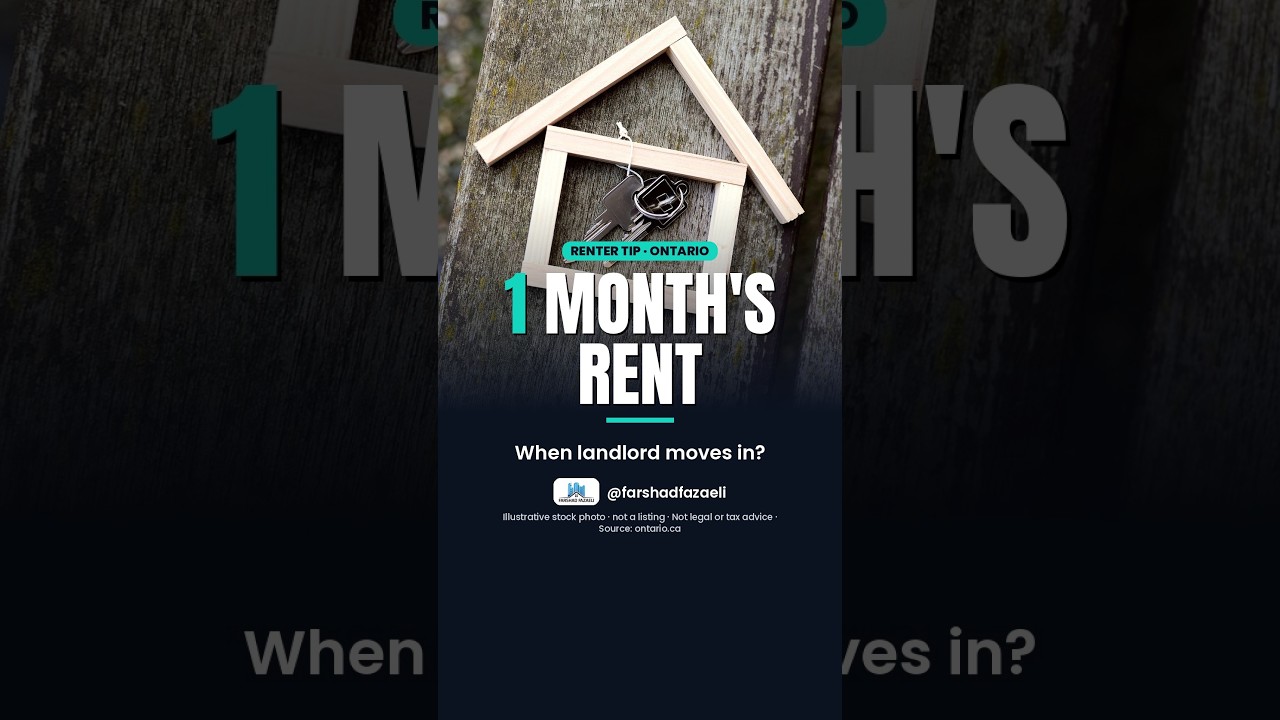
Yes, in Ontario, if a landlord evicts you for their own personal use, their family's use, a caregiver's use, or for a purchaser to move in, they must provide compensation. This is typically the equivalent of one month’s rent or an offer of another acceptable rental unit.
This rule is a key protection for tenants under Ontario's Residential Tenancies Act. It applies to what are known as “no-fault” evictions, where the tenant has not done anything wrong. The law recognizes the significant disruption an eviction causes and provides a measure of financial support. However, the process is highly regulated, and both landlords and tenants must follow specific procedures. Understanding these rules is essential whether you are a tenant receiving a notice, a landlord planning to reclaim your property, or a buyer purchasing a tenanted home.
What are the specific situations for a personal use eviction?
The Residential Tenancies Act is very clear about when a landlord can end a tenancy for personal use. It is not a broad category and is limited to a few specific scenarios. According to Ontario's official guidelines, a landlord must have honest intentions to use the rental unit for the purpose stated on the eviction notice. The valid reasons include:
- The landlord wants to use the unit themselves.
- The landlord wants the unit for a member of their family.
- The landlord requires the unit for a caregiver.
- The landlord has sold the property, and the purchaser will be using the unit themselves.
In each of these cases, the landlord must serve the tenant with the correct notice form from the Landlord and Tenant Board (LTB), which specifies the reason for the eviction.
How does the compensation work, and are there exceptions?
When a landlord gives a notice for one of the reasons listed above, they must compensate the tenant. The law provides two options for the landlord:
- Give the tenant the equivalent of one month’s rent. This payment helps the tenant with the costs of moving and securing a new home.
- Offer the tenant another rental unit that is acceptable to them.
However, there is a significant exception to this rule. As stated on the Government of Ontario's website, if your landlord gives you 120 days' notice or more to evict you for personal use, your landlord does not have to give you the equivalent of one month’s rent or offer you another unit. This is a critical detail that both parties should be aware of. The standard notice period for this type of eviction is typically shorter, but a landlord can choose to provide a longer notice period and avoid the compensation requirement.
What is the eviction process? Do I have to move out right away?
Receiving an eviction notice can be stressful, but it is important to know that a notice is not an eviction order. You do not have to move out just because you received a form from your landlord. The process is as follows:
- Written Notice: The landlord must give you a written notice on the proper LTB form, stating the reason for the eviction and the termination date.
- LTB Application: If you don't move out by the termination date, the landlord must apply to the LTB for an eviction order.
- Right to a Hearing: As a tenant, you have the right to a hearing at the LTB. This is your opportunity to explain why you should not be evicted, especially if you believe the landlord is acting in bad faith.
- LTB Order: Only the LTB has the authority to issue an eviction order. Without an order from the LTB, a landlord cannot legally force you to leave, change the locks, or remove your belongings.
What happens if the landlord is not acting in good faith?
The law requires landlords to act in good faith, meaning they must have honest intentions to use the rental unit for the purpose stated on the eviction notice. If a landlord evicts a tenant for personal use and then immediately re-rents the unit to someone else at a higher price, this is considered a bad faith eviction.
To combat this, the LTB has strong remedies. If the LTB determines a landlord acted in bad faith, it can order them to pay the former tenant a sum that may include:
- The difference between the last rent charged and the tenant’s new rent for up to a one-year period.
- Up to 12 months of the last rent that was charged to the former tenant.
- Reasonable out-of-pocket expenses for moving, storage, and other costs the tenant incurred.
Furthermore, the maximum fine for an offence under the Residential Tenancies Act can be up to $100,000 for an individual and $500,000 for a corporation, highlighting the seriousness of wrongful evictions.
What should a buyer know when purchasing a tenanted property?
If you are buying a home with the intention of living in it, but it is currently occupied by a tenant, you are relying on the seller (the current landlord) to serve the eviction notice on your behalf. The notice must clearly state that the purchaser requires the unit for their own use. It is crucial to coordinate this process carefully, as the timeline for an LTB hearing can be unpredictable and may impact your desired closing and move-in dates. As the new owner, you also inherit the good faith requirement; you must actually move into the unit as intended to avoid a potential bad faith claim from the evicted tenant.
The Bottom Line
The requirement for a landlord to pay one month's rent or offer another unit is an important protection for Ontario tenants facing a no-fault eviction for personal use. It provides some financial assistance during a difficult transition. However, the rules are specific, including the major exception for notices of 120 days or more. Tenants should remember that a notice is not an order and they have the right to a hearing. Landlords must follow the process meticulously and act in good faith to avoid severe penalties. For all parties involved, understanding the detailed procedures set out by the Landlord and Tenant Board is essential for a lawful and fair process.
This article is for informational purposes only and does not constitute legal, tax, or financial advice. Rules and regulations can change; always consult the official sources or a qualified professional.
Sources
منابع
Questions about your situation? Call or WhatsApp 647-667-5555 or visit fazaeli.ca.
Educational information only, not legal, tax or financial advice. Farshad Fazaeli, Sales Representative, International Realty Firm, Inc., Brokerage.
FAQ
What is a 'personal use' eviction in Ontario?
It's when a landlord ends a tenancy because they, a family member, a caregiver, or a purchaser who bought the property intends to move into the rental unit.
Do I have to move out as soon as I get an eviction notice for personal use?
No. An eviction notice is not an eviction order. Your landlord must apply to the Landlord and Tenant Board (LTB) for an order, and you have the right to a hearing. You only have to move if the LTB issues an eviction order.
Is the landlord always required to pay one month's rent for a personal use eviction?
Not always. The landlord must pay one month's rent or offer another unit, unless they give you 120 days' notice or more. In that specific case, this compensation is not required.
What is a 'bad faith' eviction?
A bad faith eviction occurs when a landlord gives a notice for personal use but doesn't have honest intentions to follow through. For example, they evict a tenant to re-rent the unit for a higher price instead of moving in themselves.
What can happen to a landlord if the LTB finds they acted in bad faith?
The LTB can order the landlord to pay the former tenant significant compensation, which may include the rent difference for up to a year, up to 12 months of the last rent charged, and moving expenses. Fines for offences can be up to $100,000 for an individual.
Who provides the one month's rent compensation if the property is sold and the buyer is moving in?
The current landlord (the seller) is responsible for serving the eviction notice on behalf of the purchaser and for providing the required compensation to the tenant as part of the legal eviction process.
Richmond Hill & GTA · International Realty Firm, Inc., Brokerage
647-667-5555 · info@melk.ca