Vaughan Neighbourhoods Guide: Woodbridge, Maple, Kleinburg, Thornhill Woods and the VMC
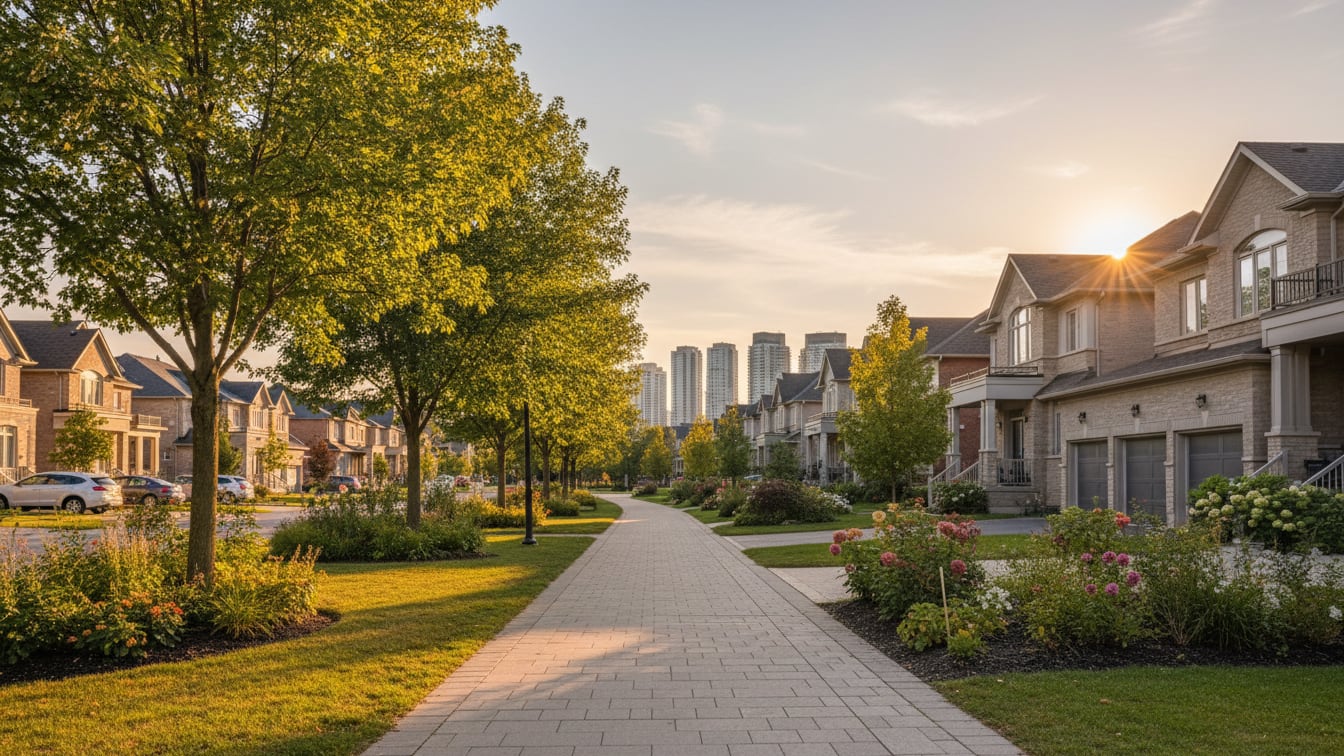
Vaughan is often treated as one place on a map, but people who live there identify with their community: Woodbridge, Maple, Kleinburg, Thornhill, Concord or the newer high-rise district around the subway. Each has a different housing mix, commute pattern and pace. This guide is a resident's-eye overview for buyers who are new to the city or comparing it with Richmond Hill and Markham. It is not a forecast of which area will rise fastest; it is about which area fits how you live.
Vaughan at a glance
Vaughan had 323,103 residents in the 2021 Census, a 5.5% increase from 2016 (Statistics Canada, 2021 Census, accessed October 2026). It is one of the largest cities in York Region and is still growing, with most new density planned around the Vaughan Metropolitan Centre and along major corridors. Like the rest of the region, Vaughan has no municipal land transfer tax. Property taxes are a separate matter, which we covered in our post on Vaughan property taxes and closing costs.
Vaughan Metropolitan Centre (VMC)
The VMC, around Highway 7 and Jane Street, is Vaughan's planned downtown. Its anchor is Vaughan Metropolitan Centre station, the northern terminus of TTC Line 1, which opened to riders on December 17, 2017 (TTC, accessed October 2026). The area also connects with the Highway 7 Viva rapidway and the regional bus terminal. Housing here is mainly new high-rise condominiums. It tends to suit commuters to York University or downtown Toronto, investors and buyers who want a condo with direct subway access. Because much of the stock is new, read builder warranty information carefully and compare maintenance fees between buildings.
Woodbridge
Woodbridge, in the southwest of the city, is one of Vaughan's most established communities. It has a historic core along Woodbridge Avenue near the Humber River, and a wide band of detached and semi-detached homes from the 1970s onward, plus newer townhouses and some larger custom homes. Woodbridge has strong Italian-Canadian roots and a well-known local food and shopping scene. Buyers here often weigh older homes on bigger lots against newer homes on smaller lots. Older properties can need updating to electrical, plumbing and insulation, so budget for that.
Maple
Maple, in the centre-north of Vaughan, grew quickly from the 1990s and is largely detached and semi-detached family housing, with Canada's Wonderland and the Cortellucci Vaughan Hospital nearby. Maple GO Station is on the Barrie line (GO Transit, accessed October 2026), which helps commuters heading downtown. Many buyers like Maple for its parks, community centres and access to Highway 400 and Major Mackenzie Drive. Traffic on Major Mackenzie at rush hour is something to test for yourself.
Kleinburg
Kleinburg, in the northwest, is a historic village surrounded by newer estate subdivisions. Its main street has shops and restaurants, and it is home to the McMichael Canadian Art Collection. Housing is predominantly large detached homes, many on generous lots, which makes it a different price bracket from most of Vaughan. Parts of the area are near the Humber River valley and regulated natural features, so check conservation authority mapping for any lot near a ravine. Kleinburg tends to suit buyers who want space and a village feel and who are comfortable driving for most trips.
Thornhill Woods and Vaughan's share of Thornhill
Thornhill is split between Vaughan (west of Yonge Street) and Markham (east of Yonge). On the Vaughan side, Thornhill Woods and nearby subdivisions are mostly detached and semi-detached homes built from the late 1990s on, with Promenade Shopping Centre and Bathurst Street retail close by. This area has long been popular with families who want quick access to Toronto via Bathurst, Dufferin or Highway 407. Older parts of Thornhill near Yonge Street have mature lots and homes from earlier decades.
Concord and the employment lands
Concord, around Highway 7 and Keele Street, mixes older residential pockets with large employment and industrial areas. Some newer townhouse and condo projects have been built near the rail corridor and Highway 7. Buyers looking here should check what is planned on nearby lands, since industrial uses, truck routes and rail lines affect noise and traffic.
Questions to ask before buying in Vaughan
- Which school serves this exact address? Confirm with the York Region District School Board or York Catholic District School Board; boundaries change.
- What is planned nearby? Vaughan's official plan and active development applications show where new towers, roads or transit are proposed.
- Is the lot regulated? Ravine and valley lots near the Humber and Don watersheds can carry Toronto and Region Conservation Authority permit requirements.
- What are the real carrying costs? Look at the actual tax bill, utilities and, for condos, fees and reserve fund health.
- How does the commute really work? Highway 400, 407 and 7 can behave very differently at 8 a.m. than on a Sunday viewing.
Comparing Vaughan with nearby cities
Buyers often shortlist Vaughan alongside Richmond Hill and Markham. Our broader post on comparing York Region neighbourhoods by schools, transit and lifestyle is a good starting point if you are still deciding on a city. Within Vaughan, the clearest dividing line is housing type: if you want a condo near rapid transit, the VMC is the natural focus; if you want a detached family home, Maple, Woodbridge and Thornhill Woods are the usual starting points; if you want acreage or a larger custom home, Kleinburg and the northern edges come into play.
Condo or freehold in Vaughan?
Much of Vaughan's new supply is high-rise, while most of its established neighbourhoods are freehold. If you are torn between a new VMC condo and an older semi in Maple or Woodbridge, compare the full monthly cost, including fees, taxes and expected maintenance, and think about how long you plan to stay. Our post on condo vs freehold in the GTA walks through that comparison.
Frequently asked questions
What is the population of Vaughan?
Vaughan had 323,103 residents in the 2021 Census, up 5.5% from 2016, according to Statistics Canada.
Does Vaughan have a subway station?
Yes. Vaughan Metropolitan Centre station is the northern terminus of TTC Line 1 and opened to riders on December 17, 2017.
Which Vaughan neighbourhoods have GO train access?
Maple GO Station is on the Barrie line, and Rutherford GO also serves Vaughan. Check current GO schedules for service levels.
Is part of Thornhill in Vaughan?
Yes. Thornhill is split by Yonge Street, with the west side in Vaughan and the east side in Markham.
General information only, not legal, tax or financial advice. Figures were checked against the sources linked above in October 2026 and can change; confirm your own numbers with your real estate lawyer, accountant or lender before you sign anything.
Farshad Fazaeli, Salesperson, International Realty Firm, Inc., Brokerage, 647-667-5555 · Richmond Hill, ON
Richmond Hill & GTA · International Realty Firm, Inc., Brokerage
647-667-5555 · info@melk.ca