Aurora, Ontario Neighbourhood Guide: Where to Live and What Each Area Feels Like
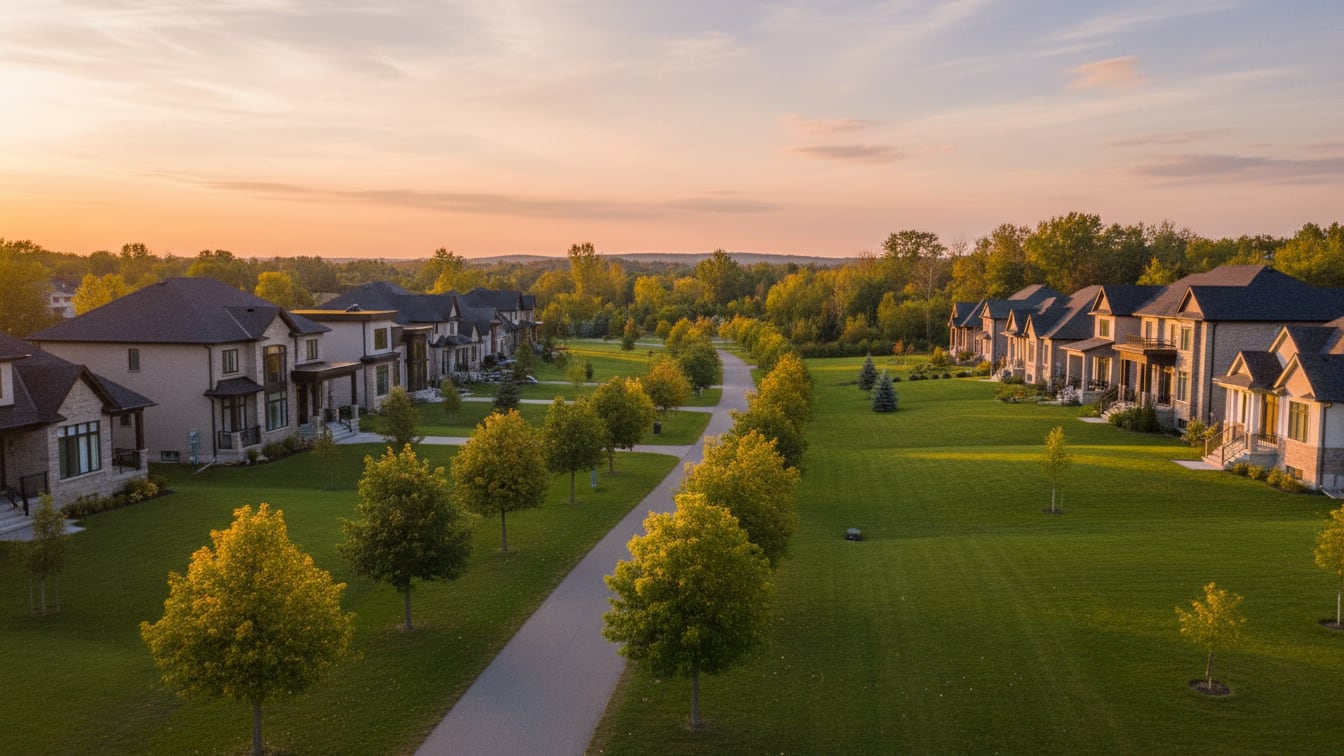
Aurora is the next town north of Richmond Hill on Yonge Street, and for many York Region families it is the natural next step when they want a bit more space, a small-town main street and still have a realistic commute to Toronto. The town had 62,057 residents in the 2021 Census, up 11.9% from 2016, on about 50 square kilometres of land (Statistics Canada, 2021 Census Profile, Aurora (accessed Oct 2026)). The Town describes itself as roughly 35 km north of Toronto along Highway 404 (Town of Aurora, Community Profile (accessed Oct 2026)).
This guide walks through Aurora's main neighbourhoods from a buyer's point of view: what the housing looks like, how you get around, and who each area tends to suit. Prices change quickly, so we focus on character rather than numbers. For a broader look at how York Region towns compare, start with our York Region neighbourhood comparison.
Getting around: GO, Yonge and the 404
- Aurora GO Station (121 Wellington St. E.) is on the Barrie line with train service to Union Station. Peak-period trains run more often than midday and weekend service; check current GO Transit schedules before you plan a commute around it.
- Yonge Street runs north–south through the historic core, with YRT bus service connecting to Richmond Hill and the Viva network.
- Highway 404 runs along the east side of town, which is why the east-end neighbourhoods are popular with drivers heading to Markham or downtown.
- Wellington Street is the main east–west road and the busiest corridor, linking Yonge, the GO station and Bayview.
Aurora Village (historic core)
The area around Yonge and Wellington is Aurora's original settlement. Expect heritage commercial buildings on Yonge, the Aurora Cultural Centre, the public library, Town Park with its seasonal farmers' market, and the GO station within walking distance. Housing is a mix of older detached homes on mature lots, some infill, and newer low-rise condos. It is the most walkable part of town and suits buyers who want to walk to a coffee shop and the train. Older homes can come with heritage considerations, so check with the Town about any designation or heritage district rules before planning major exterior changes.
Aurora Heights
West of Yonge and north of Wellington, Aurora Heights was the town's first large planned subdivision, built mostly from the 1950s through the 1970s. It is known for bungalows and side-splits on generous lots, mature trees and quiet crescents, with the Aurora Community Centre and several parks nearby. These homes often attract buyers who want to renovate or downsize to a single level, and they are generally among the more accessible detached options in town. Expect older mechanical systems and budget for updates; a thorough home inspection matters here.
Aurora Highlands
Aurora Highlands, in the southwest between Bathurst and Yonge, is large and has two personalities. Areas such as Regency Acres have 1960s and 1970s homes on established streets, while newer luxury construction on former golf-course land sits at the higher end of the market. Trails and woodlots give the area a green feel. It suits families who want space and are comfortable driving for most errands.
Bayview Wellington
East of the core, around Bayview Avenue and Wellington Street East, this area developed largely from the 1980s onward on what had been farmland. It mixes detached homes, townhouses and condo apartments, and is home to the Town Hall, the Aurora Family Leisure Complex, the Seniors' Centre and the Aurora Arboretum. Shopping along Bayview and Wellington is close by, and the GO station is reachable on foot from the western edge. A good fit for families and downsizers who want options at several price points in one area.
Bayview Northeast and the east end
North and east of Bayview Wellington, toward Leslie Street and the 404, are newer subdivisions with larger brick homes, big-box and grocery shopping, and quick highway access. Dr. G.W. Williams Secondary School is in this part of town. These areas suit commuters driving to Markham or Toronto and buyers who prefer newer construction. If you are looking at a home under seven years old, you can check remaining Tarion warranty coverage through the HCRA Ontario Builder Directory, as explained in our guide to checking a builder's reputation.
Things to know before buying in Aurora
- Oak Ridges Moraine and Greenbelt. Parts of Aurora sit on the Oak Ridges Moraine and the town is bordered by Greenbelt lands. That protects green space but also limits where new development can go. If you are buying a property near natural features, ask your lawyer and the Town about any conservation authority regulations affecting additions or pools.
- Land transfer tax. Like the rest of York Region, Aurora has no municipal land transfer tax, so you pay only Ontario's. Our post on land transfer tax in Richmond Hill vs Toronto shows how much that can save compared with buying in the city.
- Schools. Aurora is served by the York Region District School Board and York Catholic District School Board, and private options include St. Andrew's College. School boundaries change, so confirm the assigned school for a specific address with the board before you buy.
- Commute reality. Train timing and the 404 at rush hour vary. Do a test commute at the time you would actually travel.
Who Aurora tends to suit
Buyers moving up from a Richmond Hill condo who want a yard, families who value trails and community programs, and downsizers drawn to the bungalows of Aurora Heights all find something here. If you are still weighing condo against house, our condo vs freehold post may help frame the choice. No neighbourhood is right for everyone, and values can rise or fall, so treat any area as a fit for your life rather than a forecast.
Frequently asked questions
What is the population of Aurora, Ontario?
Aurora had 62,057 residents in the 2021 Census, up 11.9% from 55,445 in 2016, according to Statistics Canada.
Does Aurora have a GO train station?
Yes. Aurora GO Station at 121 Wellington Street East is on GO Transit's Barrie line, with train service to Union Station. Check current GO schedules for frequency.
Which Aurora neighbourhood is most walkable?
The historic Aurora Village area around Yonge and Wellington is the most walkable, with shops, the library, Town Park and the GO station nearby.
Is there a municipal land transfer tax in Aurora?
No. Like the rest of York Region, Aurora has no municipal land transfer tax; buyers pay only Ontario's provincial land transfer tax.
General information only, not legal, tax or financial advice. Figures were checked against the sources linked above in October 2026 and can change; confirm your own numbers with your real estate lawyer, accountant or lender before you sign anything.
Farshad Fazaeli, Salesperson, International Realty Firm, Inc., Brokerage, 647-667-5555 · Richmond Hill, ON
Richmond Hill & GTA · International Realty Firm, Inc., Brokerage
647-667-5555 · info@melk.ca